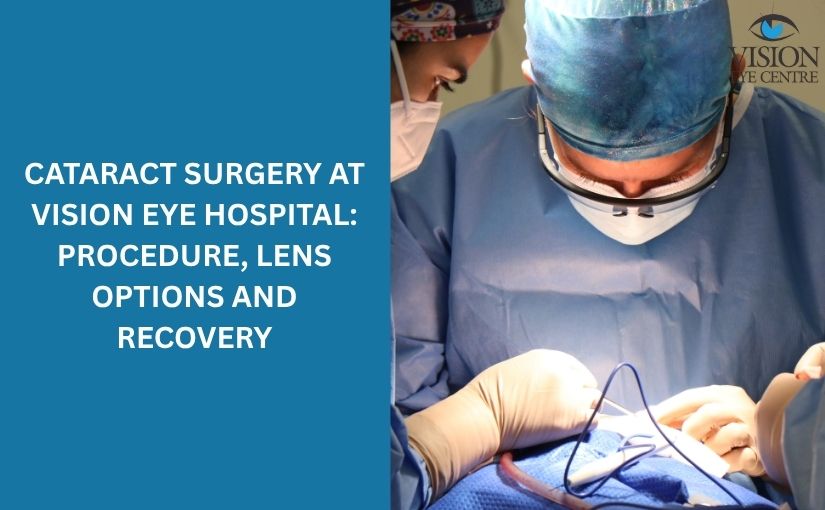
Cataract Surgery at Vision Eye Hospital: Procedure, Lens Options and Recovery
Sep 10, 2026
Cataract surgery is a procedure used to remove a cloudy natural lens and replace it with an artificial intraocular lens (IOL). For patients considering cataract treatment, understanding the surgical process, available lens options and recovery can make the consultation much easier.
At Vision Eye Centre, cataract care includes modern surgical options such as phacoemulsification and femtosecond laser-assisted cataract surgery, along with different IOL choices. The appropriate treatment depends on the patient's eye health, measurements, lifestyle and visual requirements.
What Is Cataract Surgery?
A cataract develops when the natural lens of the eye becomes cloudy. It usually develops gradually and can cause blurred vision, glare, difficulty seeing at night and reduced colour clarity.
In the early stages, a change in glasses may sometimes help with vision. However, glasses cannot remove a cataract. When the cataract begins to interfere with reading, driving, work or other daily activities, cataract surgery may be recommended.
During surgery, the cloudy natural lens is removed and replaced with an artificial intraocular lens. The IOL stays inside the eye and provides focusing power after the natural lens has been removed.
When Is Cataract Surgery Needed?
Cataract surgery is generally considered when reduced vision starts affecting a person's daily activities or quality of life. There is no particular age at which everyone needs surgery.
Common symptoms include:
- Blurred or cloudy vision
- Difficulty reading
- Difficulty driving, especially at night
- Increased glare around lights
- Difficulty recognising faces
- Colours appearing less clear
- Frequent changes in spectacle prescription
- Difficulty performing work or routine activities
An ophthalmologist can determine whether the cataract is responsible for these symptoms and whether surgery is appropriate.
How Is Cataract Surgery Performed?
Modern cataract surgery involves several stages, beginning with a detailed examination and ending with postoperative follow-up.
1. Comprehensive Eye Examination
Before surgery, the ophthalmologist examines the eye and performs measurements needed for surgical planning and IOL selection.
Depending on the patient's condition, testing may include biometry, keratometry, corneal topography, pachymetry, retinal examination and OCT when clinically indicated.
These tests can also help identify other conditions that could influence the expected visual outcome.
2. Selecting the Surgical Technique
The surgeon determines which cataract surgery technique is appropriate for the patient's eye.
Phacoemulsification is a widely used technique in which ultrasound energy is used to break the cloudy lens into small fragments before removal.
For selected patients, femtosecond laser-assisted cataract surgery may also be considered. The laser can assist with specific steps of the procedure.
3. Removing the Cloudy Lens
In phacoemulsification, the surgeon accesses the lens through a small incision and uses ultrasound energy to break the cataract into smaller pieces. The lens material is then removed.
The exact technique can vary according to the cataract and the condition of the eye.
4. Implanting the Intraocular Lens
After the cloudy lens has been removed, the selected IOL is positioned inside the eye.
The choice of IOL is an important part of cataract surgery because different lenses are designed to meet different visual requirements.
5. Postoperative Follow-Up
After surgery, the eye is monitored during follow-up appointments. The patient receives instructions regarding prescribed medication, eye care and activities during the healing period.
Cataract Surgery Options at Vision Eye Centre
Vision Eye Centre provides different approaches to cataract treatment depending on the patient's individual requirements.
Phacoemulsification
Phacoemulsification uses ultrasound energy to fragment the cloudy lens so it can be removed through a small incision. An IOL is then implanted.
It is an established modern cataract surgery technique and can be combined with different IOL options.
Femtosecond Laser-Assisted Cataract Surgery
Femtosecond laser-assisted cataract surgery, or FLACS, uses a femtosecond laser for selected steps of cataract surgery.
The laser can assist with certain incisions, capsular opening and cataract fragmentation. Whether laser-assisted surgery is appropriate depends on the patient's eye and the surgeon's assessment.
Choosing a laser procedure should therefore be based on clinical suitability rather than simply choosing the technology that sounds most advanced.
Understanding Cataract Lens Options
The intraocular lens is one of the most important decisions during cataract treatment. Different IOLs have different optical designs and are intended for different visual needs.
Monofocal IOL
A monofocal IOL is designed to provide clear vision at one primary distance.
For example, the surgeon may target distance vision. The patient may then need glasses for reading or other close-up activities.
Monofocal lenses can be a suitable option for patients who prefer a straightforward visual target.
Multifocal IOL
Multifocal IOLs are designed to provide vision at more than one distance.
For appropriately selected patients, they may reduce dependence on glasses for some daily activities. However, they are not suitable for every eye, and patients should discuss their potential benefits and limitations with their surgeon.
Toric IOL
A toric IOL is designed to address corneal astigmatism during cataract surgery.
Patients with significant astigmatism may be evaluated for a toric lens. Accurate preoperative measurements are particularly important when planning this type of IOL.
Trifocal IOL
Trifocal IOLs are designed to provide vision across near, intermediate and distance ranges.
They may be considered for selected patients who want a broader range of vision after cataract surgery. The patient's corneal, retinal and overall eye health should be assessed before making this choice.
Which Cataract Lens Is Best?
There is no single IOL that is best for everyone.
The appropriate lens depends on factors such as:
- Eye measurements
- Corneal health
- Astigmatism
- Retinal and macular health
- Existing eye conditions
- Previous eye surgery
- Lifestyle
- Occupation
- Reading requirements
- Desired distance vision
- Expectations regarding glasses
For example, someone who spends much of the day reading may have different priorities from someone whose main requirement is clear distance vision for driving.
A detailed discussion with the cataract surgeon is therefore more useful than selecting an IOL based solely on its price or technology.
What Tests Are Done Before Cataract Surgery?
Preoperative testing helps the surgeon understand the eye and calculate the appropriate IOL power.
Depending on the patient's needs, an evaluation may include:
Biometry: Used to obtain measurements required for IOL power calculation.
Keratometry: Measures the curvature of the cornea and contributes to IOL planning.
Corneal topography: Provides information about the shape and surface of the cornea.
Pachymetry: Measures corneal thickness.
Retinal examination: Helps evaluate the retina before surgery.
OCT: May be recommended when the ophthalmologist needs a more detailed assessment of the retina or macula.
These examinations are particularly important when a patient is considering an advanced IOL or has another eye condition.
Cataract Surgery Recovery
Recovery after cataract surgery varies between patients. Some people notice clearer vision relatively soon, while the eye can take longer to settle.
Immediately after surgery, it is possible to experience temporary blurred vision, mild irritation or sensitivity to light. These symptoms should be discussed with the treating ophthalmologist if they are significant or persistent.
Patients should follow their postoperative instructions carefully, including the use of prescribed eye drops and attendance at follow-up appointments.
During Recovery
Patients are generally advised to:
- Avoid rubbing or pressing on the operated eye
- Use prescribed eye drops as instructed
- Follow activity restrictions provided by the surgeon
- Attend scheduled follow-up appointments
- Report unusual or worsening symptoms promptly
The recovery plan can differ according to the surgical procedure and the patient's individual eye condition.
When Should You Contact Your Eye Doctor After Surgery?
Some discomfort or temporary visual changes can occur after cataract surgery, but certain symptoms require prompt medical attention.
Contact your eye-care professional if you experience:
- Sudden reduction or loss of vision
- Severe or increasing eye pain
- Significant redness
- Increasing swelling
- Flashes of light
- A sudden increase in floaters
- Any other concerning change in vision
Prompt assessment can help identify and manage postoperative problems when necessary.
Cataract Surgery at Vision Eye Centre, Delhi
Vision Eye Centre provides cataract evaluation and surgical care in Delhi, including phacoemulsification, femtosecond laser-assisted cataract surgery and different IOL options.
The centre's cataract services are supported by ophthalmologists with experience in cataract and related areas of eye care. Dr. Tushar Grover is listed by Vision Eye Centre as Medical Director and Senior Consultant with expertise in cataract, cornea and refractive surgery.
Patients can discuss their symptoms, examination findings, surgical options and IOL choices during a consultation before deciding on treatment.
Frequently Asked Questions
Is cataract surgery painful?
Cataract surgery is performed using anaesthesia to numb the eye. Patients may experience some sensation or pressure during the procedure, but the experience varies from person to person. Your surgeon will explain the anaesthesia and procedure before surgery.
How long does cataract surgery take?
The surgical procedure is generally relatively short, although the total time at the eye centre also includes preparation, examination and postoperative instructions. The duration can vary depending on the individual case and surgical plan.
Can cataract surgery correct astigmatism?
In suitable patients, astigmatism can be addressed during cataract surgery. A toric IOL may be considered when the patient's eye measurements support its use.
Will I need glasses after cataract surgery?
That depends on the IOL selected and the visual target planned by the surgeon. Monofocal lenses generally focus at one primary distance, while selected premium IOLs are designed to provide a broader range of vision. Some patients may still need glasses for particular activities.
Is femtosecond laser cataract surgery better than phacoemulsification?
Neither technique is universally better for every patient. Femtosecond laser technology assists with selected steps of surgery, while phacoemulsification uses ultrasound energy to remove the cataract. The appropriate approach depends on the patient's eye and surgical requirements.
How long does it take to recover from cataract surgery?
Recovery varies from patient to patient. Vision may improve as the eye heals, but the timeline depends on factors such as the patient's eye health, procedure and individual healing response. Follow-up appointments are important during recovery.
Making an Informed Cataract Surgery Decision
Modern cataract surgery gives patients several choices, from the surgical technique to the type of IOL implanted. Phacoemulsification remains an important cataract surgery technique, while femtosecond laser assistance may be considered for selected patients. Monofocal, multifocal, toric and trifocal IOLs provide different visual options.
The right combination depends on the individual eye rather than a single "best" procedure or lens.
A detailed examination at Vision Eye Centre can help determine the condition of the eye, explain the available cataract surgery options and identify an IOL that fits the patient's visual requirements and expectations.
Medical disclaimer: This article is intended for general educational purposes and does not replace an examination or medical advice from a qualified ophthalmologist. The surgical technique, IOL and postoperative care should be determined according to the individual patient's eye condition.